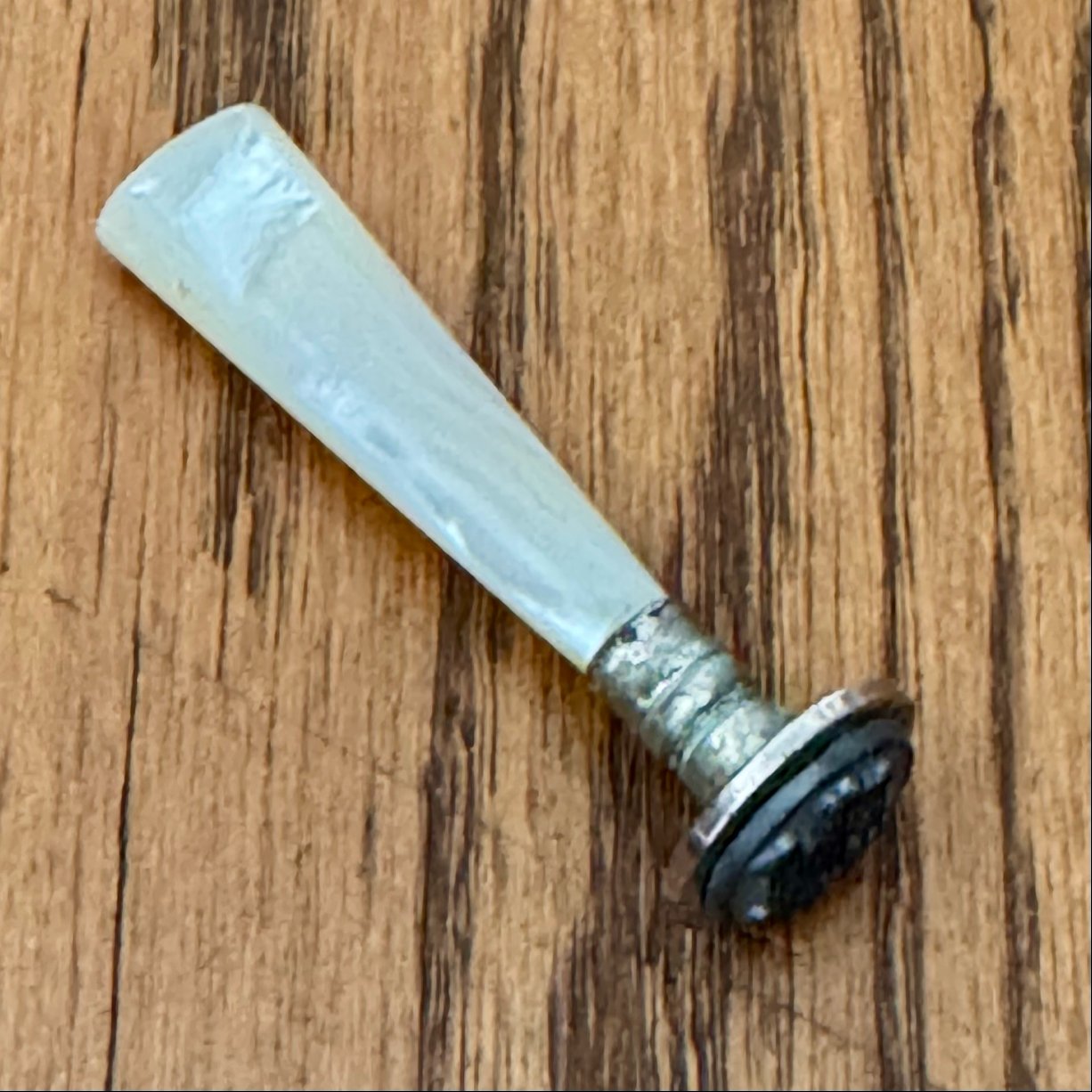
Wax Seals
Wax seals, also known as signet seals, were instruments of official and private correspondence used from the 16th to the 19th century to authenticate letters and documents. They were pressed into molten wax to leave a raised impression: family coat of arms, monogram, motto or figurative scene. Their use gradually declined with the widespread adoption of the gummed envelope at the end of the 19th century, yet they remained fashionable among aristocratic and bourgeois circles until around 1900 as symbols of prestige and social distinction.
European production was particularly abundant in Great Britain, France and Imperial Russia. London goldsmiths from the Birmingham quarter, Parisian houses from the Palais-Royal gallery, and the workshops of Fabergé in Saint-Petersburg produced pieces of remarkable formal diversity. The handles — the part held in the hand — were crafted in solid silver, gilt bronze, cut crystal, agate, carnelian or ivory, while the engraved matrix was most often made of hardened steel or brass.
When assessing an antique seal, the collector first examines the condition of the matrix: the sharpness of the engraved motif directly determines the legibility of the impressions and the value of the piece. On silver examples, the presence of maker's marks and assay hallmarks allows the piece to be dated and attributed with precision. The articulation of the handle, when it features a pivoting mechanism to house the matrix, should operate without excessive play. A documented provenance — identified armorials, bookplates, original case — significantly enhances the heritage interest of the piece.